Donor Tips
How to Donate Plasma: A Guide for First-Time Donors
Jul 23, 2026
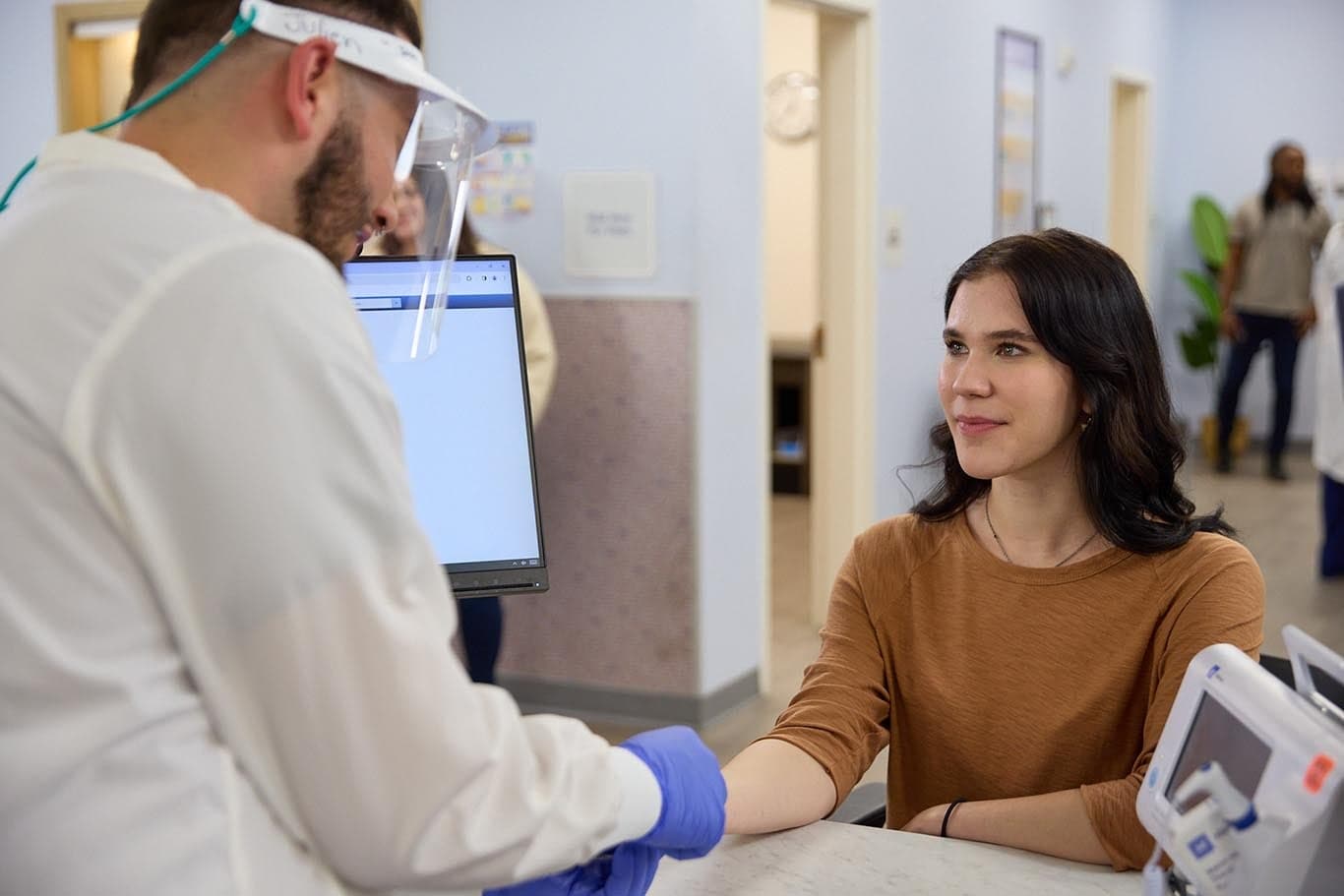
Most people are familiar with blood donation, but many are just now learning about the difference that plasma donation can make for others. Whether you’re new to plasma donation or just looking to learn more, we appreciate your interest in making a positive impact.
You might be asking yourself, “What exactly is plasma?” Plasma is the pale, yellow liquid that makes up over half of our blood. It helps move proteins, platelets, and blood cells around the body. And it contains antibodies that help us fight diseases.1
This guide sets out to introduce you to the plasma donation experience so you can learn what to expect when donating. We’ll also answer questions you likely have as a potential first-time donor. Your journey toward saving lives starts here!
Donating plasma is a process where blood is drawn, plasma is separated, and the remaining blood components are safely returned to your body. Your first donation appointment usually takes about 2 hours, while future visits should only take 1 to 1.5 hours.
At BioLife centers, our staff makes the donation process comfortable and stress-free. Here’s a quick rundown of what will happen during your first appointment:
A little preparation before your appointment can help everything go more smoothly.
You may be wondering what to eat before your appointment. We recommend a non-greasy meal that’s packed with protein and iron during the 3 hours before your appointment. It’s even better if you can stick to lean proteins and iron-rich foods in the 24 to 48 hours before donating. This will help boost your protein and hematocrit levels, which are important for your plasma.
To help your body get ready, it’s also important to hydrate the day or two before your appointment. Water or drinks with electrolytes are both great options.
And don’t forget to gather your documents so we can verify your eligibility at check-in.
For the next 48 hours, your body will be regenerating plasma. You can help it along by:
You can find more tips on how to prepare for plasma donation before your visit here.
Your first plasma donation visit will take a little longer than future visits. That’s because we need to do a physical examination and review your health history. This process includes checking your weight, blood pressure, pulse, temperature, protein level and hematocrit level (the volume of red blood cells in your body).
We also need you to bring the following documents:
After a successful donation, we’ll give you a BioLife Debit Mastercard. No approval or credit check is required, and rewards are automatically loaded on your card.

Many people agree that donating does not hurt. Some donors report a brief sting when the needle goes in, but that’s about it. Any side effects are usually mild and typically limited to dizziness or lightheadedness after donation. You can minimize these side effects by following a few health and nutrition tips before donating.
We understand that you may still be a little nervous about the process. That’s okay! BioLife donation centers have highly trained staff who monitor you during the donation to make sure you feel great every step of the way. We encourage you to speak up if something feels uncomfortable or you experience any side effects.
In addition to comfort, many first-time plasma donors wonder about safety.
Available studies have shown that donating plasma is as safe as giving blood.2 The process is regulated by the U.S. Food & Drug Administration (FDA). BioLife donation centers follow all FDA rules and regulations, including donor eligibility requirements.
We are committed to making the plasma donation experience as safe and comfortable as possible for donors. Our safety measures include performing health screenings and medical history reviews to ensure you’re healthy and able to donate. These confidential health checks, along with some simple preparation, help prevent any side effects.
As part of our commitment to safety, our trained professionals use new, sterile disposable collection sets for each plasma donation and properly maintain all equipment.
Now that you know how safe it is to donate, there are a few eligibility factors to keep in mind.
Certain health requirements may disqualify you or delay your donation. This is called a deferral. Most delays are temporary, lasting one day to as long as several months. Permanent deferrals are possible but rare.
They’re usually issued only when you have a serious medical condition or test positive for an illness like HIV or hepatitis.
Reasons why you may be temporarily ineligible to donate include:
If you receive a deferral, don’t worry! Center staff will help you understand the reason for the deferral and when you will be able to donate. We also make it easy to track some types of deferrals through the BioLife app. For tips on how to avoid a deferral, take a look at our guide to plasma donation deferrals.
Once you’ve figured out if you’re eligible to donate, it’s time to find a donation center near you.
BioLife makes it easy to find a convenient place to donate plasma. Our specialized plasma donation centers are equipped to collect plasma safely every day to create life-saving medicines. We have locations across the nation. You can easily find your nearest center using our plasma donation center locator.
To schedule your first donation, sign up on our website. Or, download the BioLife App (Apple/Android).
Before you get an appointment on the calendar, it’s helpful to understand how we compensate you for your time donating so you can take full advantage of it.
Donor compensation may change over time and may vary based on factors including individual donation history, location, and market conditions. Compensation is provided to donors who complete a successful plasma donation.
As a first-time plasma donor, you may qualify for a new donor bonus. Our Buddy Bonus is also a great way to introduce a friend or family member to plasma donation and you could receive extra financial rewards. Find your local center and check out its available promotions.
We provide compensation as a recognition of the time and commitment involved in participating in the plasma donation process. It’s our way of saying thank you for your contribution. Repeat donors have an opportunity to earn more while helping us serve patients in need of the life-saving medications made from plasma.
More questions? Check out this helpful plasma donor compensation guide.
If you are healthy, you can donate plasma twice within a seven-day period, with at least one calendar day between donations. These limits are set by the FDA to give your body the proper recovery time.
As a first-time donor, we’ll need two donations from you before we can use your plasma. This is a safety precaution put in place by the FDA. Be sure to schedule your next appointment within six months, or consider becoming a more frequent donor.
Many of our donors give plasma again and again because it’s a win-win. They get financially rewarded for their time, and they help others. Speaking of which, we asked some of our repeat donors to share dos and don’ts for first-time donors.
Still not sure if plasma donation is right for you? Here are five great reasons to consider donating today.
1. “Plasma,” Cleveland Clinic, last updated March 13, 2025, https://my.clevelandclinic.org/health/body/22865-plasma
2. Cho J & Hiskey M (2021). Transfusion, 61(10): 2803–2805.

Download Our App


BIOLIFE and  are registered trademarks of Baxalta Incorporated. Takeda and
  are registered trademarks of Takeda Pharmaceutical Company Limited. © 2026 Takeda Pharmaceutical Company Limited. All rights reserved.


BIOLIFE and are registered trademarks of Baxalta Incorporated. Takeda and are registered trademarks of Takeda Pharmaceutical Company Limited. © 2026 Takeda Pharmaceutical Company Limited. All rights reserved.